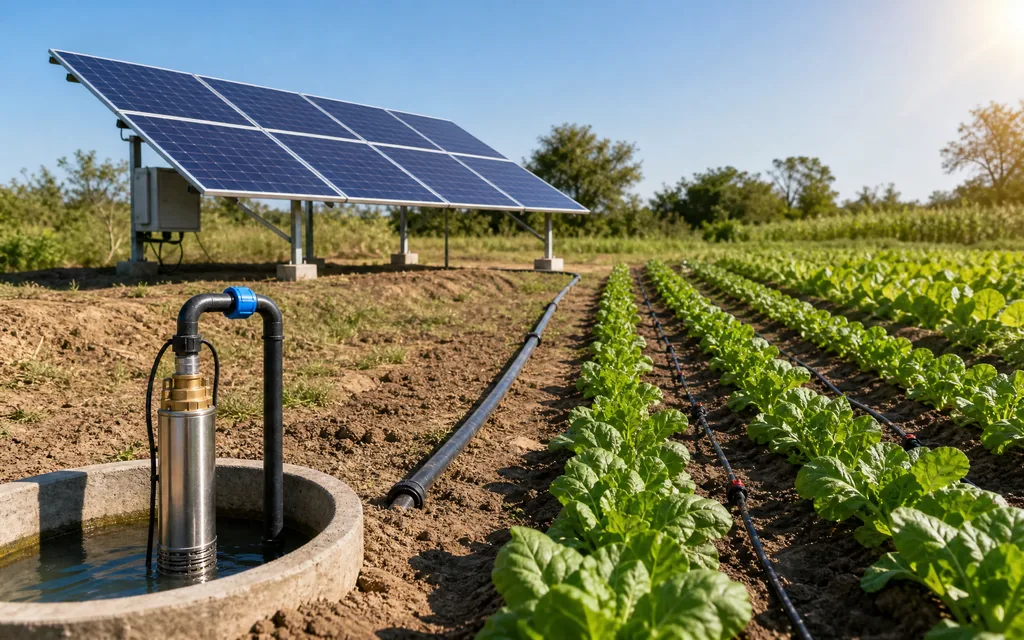
Farm irrigation
Match your water source to the daily needs of your crops and irrigation system.
Illustrative configuration
- Well depth
- 80 m
- Water output
- 20 m³/day
I'm Trista. I help you choose a solar water pump for your well, your water needs and your budget. Clear advice, from the first question to your system configuration.
Illustrative configurations for common water needs. Your well, daily demand and local sunlight determine the final sizing.
Match your water source to the daily needs of your crops and irrigation system.
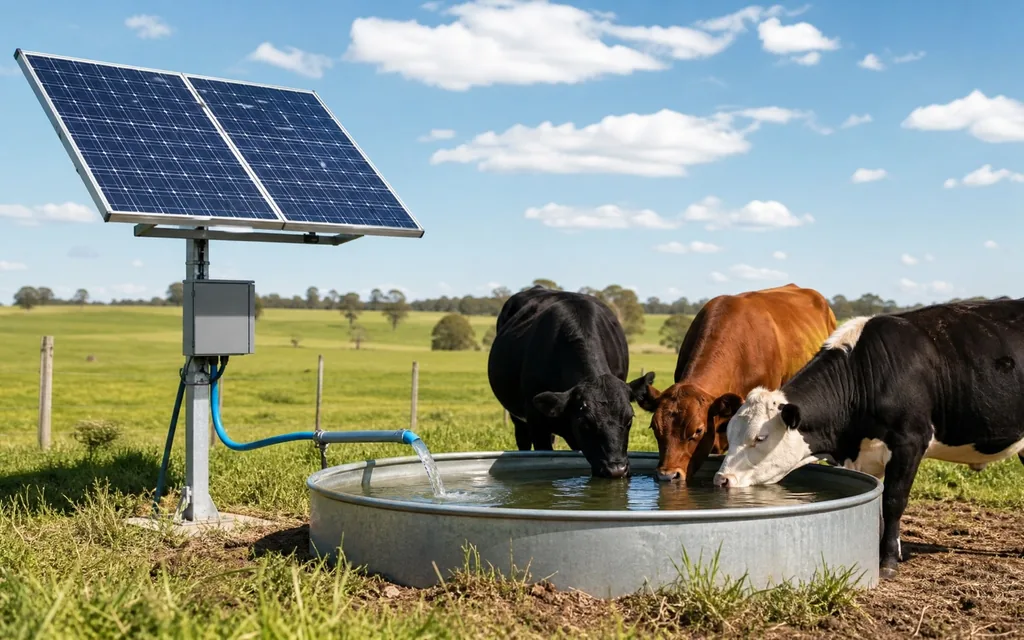
Plan water supply around your herd, drinking points and storage tanks.
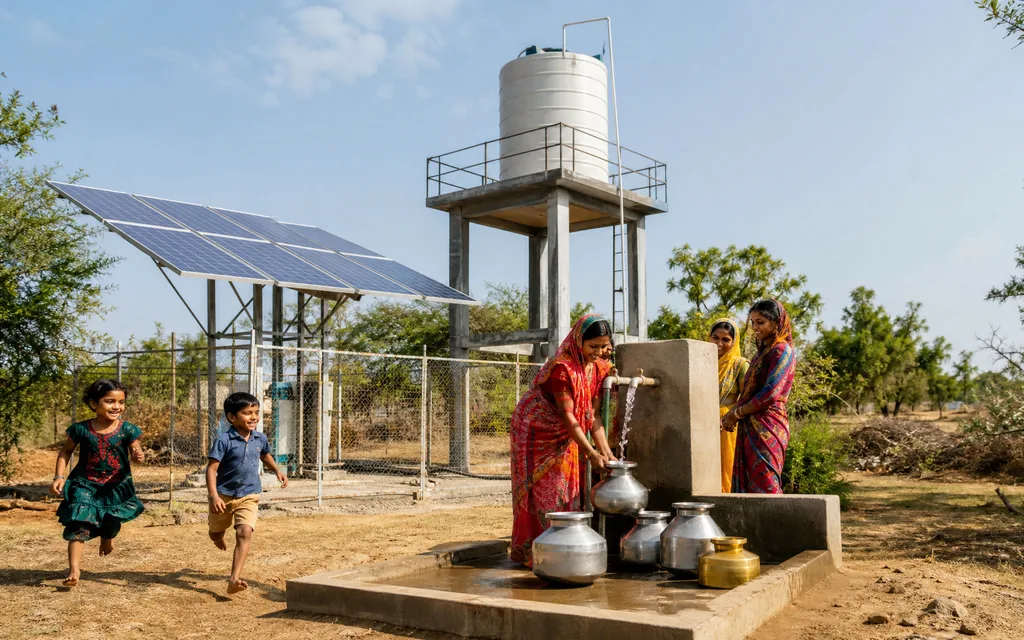
Bring well water to storage for homes and communities beyond the grid.
Explore the tools, compare your options, then talk through the details with me.

I've spent 4 years in the solar water pump industry, working directly with the factories that build these systems. I've helped buyers in over 30 countries.
Here, I write the guides I wish every buyer had read before spending a dollar. Everything is based on real installations and real data from the field.
Meet TristaShare your well depth, daily water need and location.
We look at pump duty, solar panels and the conditions on your site.
Discuss the configuration, budget and questions before you decide.
A solar pump array is a sail planted in the most wind-exposed ground on the farm. Why the panels survive storms the racking does not, the wind arithmetic per module, corner zones that take 2-3x the load, the design chain from wind speed to foundation, and the pre/post storm inspection. Nine models verified against the live product database.
Read the guideA solar pump that fills a tank needs one more component to be a system: something that decides when to stop. The five-level automation ladder — overflow observation, float valves, float switches, electrode probes and constant-pressure control — which level each pump class from 2DPC to 8DSC actually needs, why a wrongly wired float switch stops the pump when the tank is empty, why electrode probes fail in rainwater, and how automation saves more water than labor. Eleven models verified against the live product database.
Read the guideNothing about importing a solar pump is technically hard — it is a stack of papers and a misunderstood cost structure. Where FOB, CIF and EXW place the risk on the sea leg, why panels should usually be bought locally, how the HS code sets your tax, the risk structure of four payment methods, and the three documents that strand machines at port. Twelve models verified against the live product database.
Read the guideA pump's output isn't one number — it's a curve. The deeper the well, the less water the same pump delivers. These are typical working points, not maximums. Your real system depends on your exact well depth and water need, so message me and I'll size it precisely, free.
Scroll horizontally to compare all columns
| Pump Power | Working Head | Output @ that head* | Pump Type | Typical Use |
|---|---|---|---|---|
| 1 HP | 40 m | 10 m³/day | Surface / submersible | Home garden, small plot |
| 2 HP | 60 m | 20 m³/day | Submersible | 1–2 ha drip irrigation |
| 3 HP | 80 m | 30 m³/day | Submersible | 2–5 ha farm, livestock |
| 5 HP | 100 m | 50 m³/day | Deep-well submersible | 5–10 ha, deep wells |
| 7.5 HP+ | 120 m | 80 m³/day | Deep-well submersible | Commercial / village supply |
* Output shown at the working head in that row, with ~5 peak sun hours. Push the same pump deeper and the flow drops — that's the pump curve. Give me your well depth and daily water need and I'll find your exact point, free.